

Choosing a lightweight wheelchair isn’t just about picking the lowest number on a spec sheet. It’s about how easy it is to lift into the boot, how smoothly it rolls on the pavement, and whether it actually fits the person using it. This guide keeps things practical, with examples and tips drawn from the Mobiquip range so you can shop confidently and avoid common mistakes.
While you read, you can browse the full category here: Mobiquip Wheelchairs. If you want only the lightest options, jump straight to Mobiquip Lightweight. For the thinking behind materials and design choices, see the Mobiquip Lightweight Story.
What “lightweight wheelchair” really means on Mobiquip
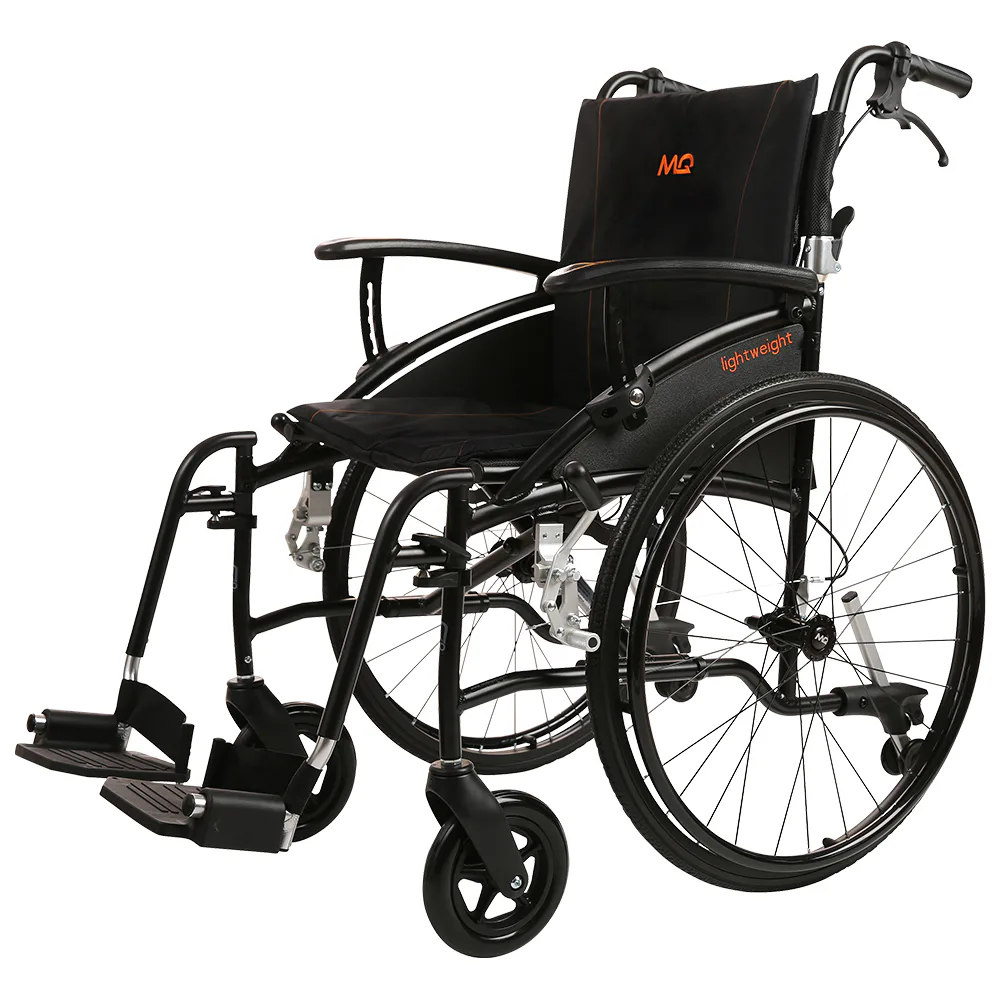
On Mobiquip, “lightweight” means a chair that’s genuinely manageable for everyday life: easy to fold, simple to lift, sturdy on UK paths and shop floors. You’ll typically see two styles:
- Transit lightweight wheelchairs – Smaller rear wheels, pushed by a companion. These are often the lightest to lift and the most compact for storage or quick appointments.
- Self-propel lightweight wheelchairs – Larger rear wheels with push rims for independence and smoother outdoor rolling. Still light enough for most car boots, with better kerb control and fewer arm pushes per metre.
Tip for the boot test: on each product page, check the overall chair weight and the heaviest single part when folded (e.g., with quick-release wheels off). That single-lift number is the one your back will notice.
Explore both formats in Mobiquip Wheelchairs, then filter by Transit or Self-Propel to narrow your shortlist.
Frames & materials: why some chairs “feel” lighter than their weight
A great lightweight wheelchair isn’t just low in kilograms; it feels nimble and tracks straight without flex.
- Aluminium frames: The core of the Mobiquip range. Aluminium keeps weight low, resists corrosion and offers a reliable price-to-performance balance. Look for shaped or ovalised tubing – this adds stiffness without adding mass.
- Alloy & composite components: You’ll often see light hubs, rims and cross-brace parts. These small choices save grams and improve response when you push off, turn, or hop a small kerb.
- Rigidity matters: Stiff frames roll straighter and convert your push into movement instead of frame twist. This is why two chairs with similar weights can feel very different on the move.
For a peek into how Mobiquip trims weight without compromising strength, the Mobiquip Lightweight Story is a quick, useful read.
Folding, quick-release and everyday transport
Most Mobiquip lightweight wheelchairs fold at the seat, so they slot neatly into a cupboard or car. A few features make daily life easier:
- Quick-release rear wheels (on self-propel models) let you remove the heaviest parts in seconds for separate lifting.
- Swing-away or detachable footrests shrink the folded footprint and simplify standing transfers.
- Clear carry points on the frame help you lift safely without trapping fingers.
You can filter for these features within Mobiquip Lightweight to match your transport routine.
Sizing: the make-or-break step for comfort and control
Correct sizing is the biggest factor in long-term comfort. Get it right and a lightweight wheelchair feels stable, easy to push and supportive for longer outings.
Measurements to check before you buy:
- Seat width: Measure the widest part of the hips while seated, then add 2–3 cm for clothing. Too narrow rubs; too wide harms posture and makes self-propelling harder.
- Seat depth: Measure from the back to behind the knee, then subtract 2–4 cm so the cushion front doesn’t press on the calves.
- Seat height from floor: Impacts footrest clearance and reach to push rims. If you’ll self-propel, check you can reach rims with elbows slightly bent.
- Backrest height: Lower for freedom to push (sportier feel), higher for support on longer sits.
- Armrest height & type: Desk-length arms tuck closer to tables; flip-back arms help with transfers; height-adjustable arms suit multi-user households.
If you’re between sizes, prioritise posture and propulsion over chasing the smallest frame. The right fit reduces fatigue more than shaving a few hundred grams.
Comfort options that genuinely help day-to-day
Lightweight shouldn’t mean bare-bones. Mobiquip models typically offer:
- Quality seat cushions that spread pressure, keep you cooler and stabilise posture. Removable, washable covers are a plus.
- Tyre choices: puncture-proof (low upkeep) or pneumatic (more comfort on rougher ground).
- Adjustable footplates with heel loops and angle settings for better leg comfort.
- Flip-back or height-adjustable armrests for easier transfers and desk access.
- Anti-tip wheels for confidence on ramps and steeper pavements.
You’ll see these listed clearly on Mobiquip Wheelchairs pages so you can compare like-for-like.
Handling & maneuverability: what you’ll feel on the pavement
A well-designed lightweight wheelchair should feel responsive, not twitchy. Three things influence that feel:
- Frame rigidity – Less flex means straighter tracking and more of your push turning into forward motion.
- Weight distribution – Balanced components around your centre of gravity deliver a planted yet agile ride.
- Wheelbase & caster size – Slightly larger front casters handle uneven paving better; an appropriate wheelbase stabilises without harming turning circle.
If you care about how a chair feels on cambers, slopes and kerbs, the Mobiquip Lightweight Story explains why some setups feel more confident than others.
Real-world buying checklist (Mobiquip edition)
Use this quick list as you compare models in Mobiquip Lightweight:
- What’s the heaviest single piece you’ll lift (frame or frame + wheels removed)?
- Does the seat size match your measurements, with a couple of centimetres for clothing?
- Are the armrests right for you (desk-length, full-length, flip-back, height-adjustable)?
- Do you need quick-release wheels or swing-away footrests for your boot?
- Which tyres fit your routine – low-maintenance puncture-proof or more cushioned pneumatic?
- Is a seat cushion included and is the cover washable?
- Do you want anti-tips for added security on ramps?
FAQs: lightweight wheelchair basics for Mobiquip shoppers
How light is “light” for everyday lifting?
Many shoppers find anything under roughly 11-12 kg easy to manage in parts (frame plus removable wheels). Always look for the heaviest-part figure if listed.
Transit or self-propel – what’s easier?
Transit chairs are usually lighter and more compact. Self-propel chairs give independence and smoother rolling outdoors. If you’ll travel solo at times, self-propel is worth it.
Do I need quick-release wheels?
If you’re lifting in and out of a car regularly, yes—being able to remove the big rear wheels makes the frame much easier to handle.
Solid or pneumatic tyres?
Solid (or puncture-proof) tyres are low-upkeep and great for town use. Pneumatic tyres add comfort and grip on mixed surfaces.
Can I upgrade cushions and armrests later?
Often, yes. Many Mobiquip models accept accessory swaps such as cushions, arm pads and anti-tips, so you can fine-tune comfort over time.
Where to start
- Measure seat width and depth properly.
- Decide transit (lightest, companion-pushed) vs self-propel (independence, smoother outdoors).
- Choose the features you’ll use every day: quick-release wheels, swing-away footrests, anti-tips, tyre type.
- Shortlist two or three options from Mobiquip Lightweight and compare lifting weights and sizing side-by-side.
- Read the Mobiquip Lightweight Story to understand the design trade-offs before you decide.
The takeaway
A great lightweight wheelchair should be simple to lift, comfortable for hours, and properly sized so every push counts. With Mobiquip’s focused range, clear feature filters and thoughtful design, you can match the chair to the person—not the other way around. When you’re ready, browse Mobiquip Wheelchairs or head straight to the Mobiquip Lightweight collection and build your shortlist today.