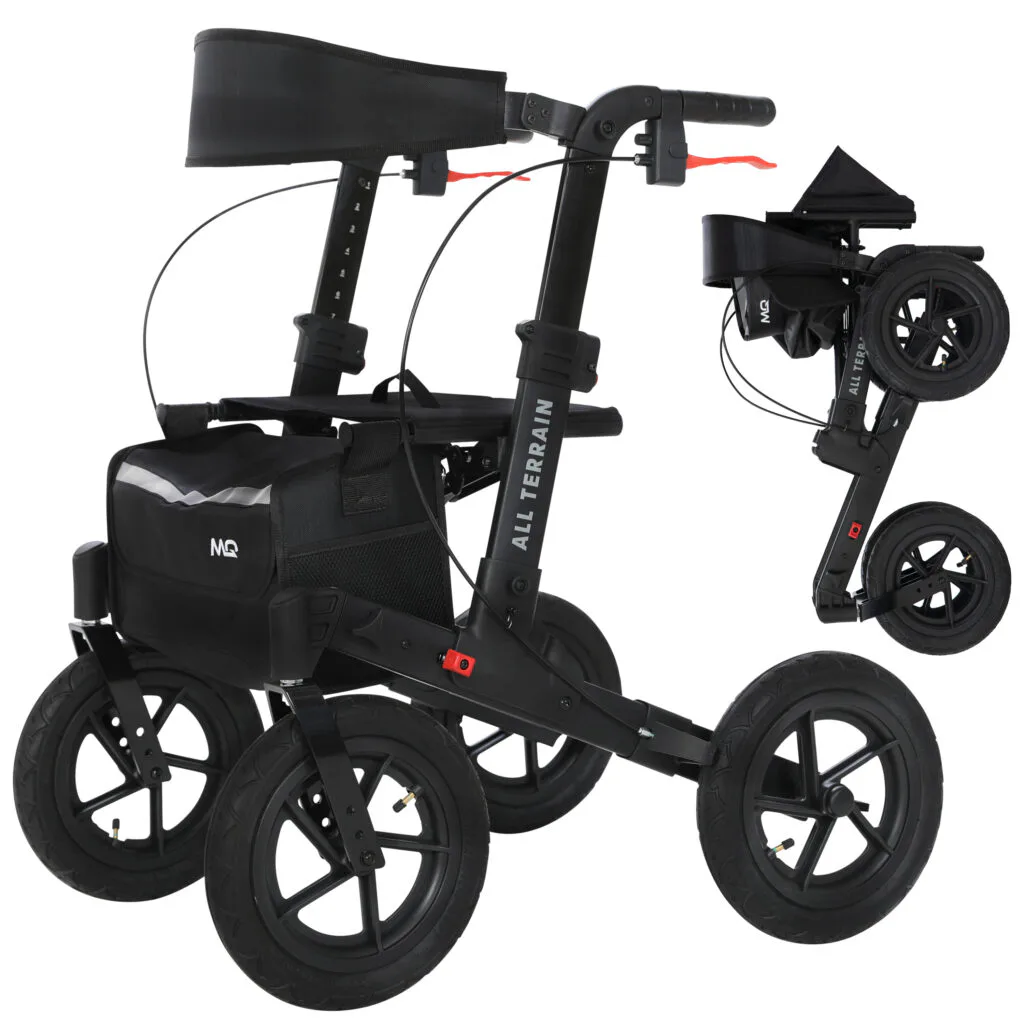


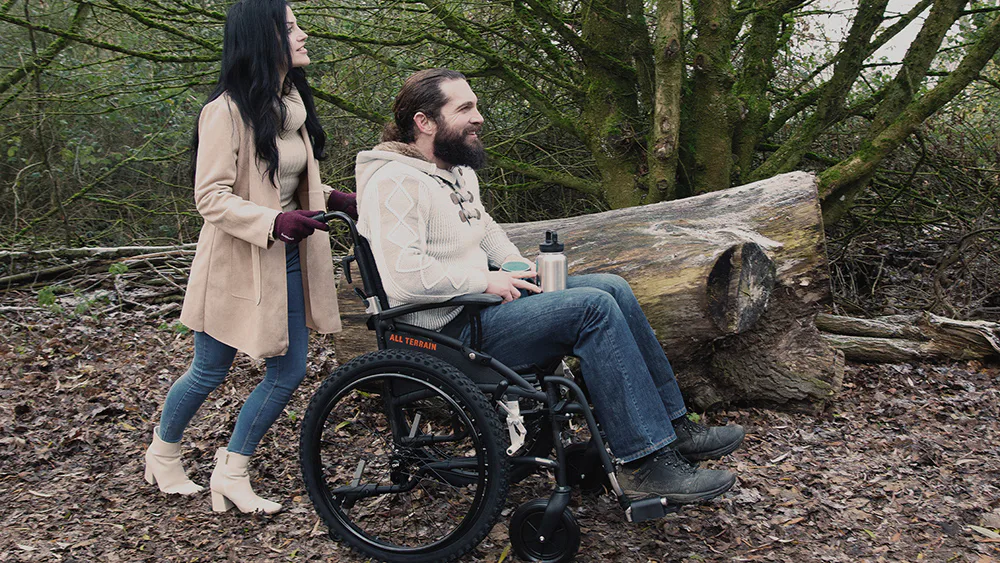
An all terrain wheelchair is built to keep you rolling when the surface turns rough. Think woodland paths, farm tracks, pebble beaches, festival fields, castle courtyards and village lanes after rain. This guide explains the difference between transit and self-propelled models, how to choose tyres and sizing, and which features actually help on British ground. All examples and links point you to Mobiquip’s dedicated ranges so you can compare real products as you read.
Start here: Mobiquip All Terrain
Design background and testing: All Terrain Story
Compact option for smaller cars: Mobiquip All Terrain Mini and the detailed All Terrain Mini page
What makes an all terrain wheelchair different
A true all terrain wheelchair is more than a standard chair with knobbly tyres. The frame and running gear work together to stay stable on uneven ground while keeping the push smooth and predictable.
- Wider, grippier tyres spread load and bite into grass, gravel and sand.
- Stronger forks and hubs handle side loads from cambered paths and ruts.
- Balanced geometry helps the chair track straight without wandering.
- Clearance and footplate design avoid catching roots, stones and kerbs.
- Effective brakes control speed on slopes and wet grass.
You will see these themes across Mobiquip’s all terrain range here: mobiquip.co.uk/mobiquip-all-terrain.
Transit vs self-propelled: which suits your routes
Both formats exist in the Mobiquip range, and both are capable off paved paths. The right choice comes down to how you travel and who is pushing.
Transit all terrain wheelchairs
- Best for: mixed days out with a companion, tight gateways, boardwalks, car parks to viewpoints.
- Why choose transit: smaller rear wheels make the chair compact and easy to stow. Lower rotating mass helps on stop-start routes with lots of gates and stiles nearby.
- Good to know: look for comfortable push handles, positive parking brakes and a balance that keeps the front casters light enough to lift over ruts.
Explore transit options within Mobiquip All Terrain.
Self-propelled all terrain wheelchairs
- Best for: independence on tracks and parkland, longer stretches where you can keep a steady rhythm.
- Why choose self-propel: large rear wheels roll over rough patches more easily and let you choose your line around potholes and stones.
- Good to know: quick-release rear wheels help with loading, and push rim finish matters when wet or muddy.
See the design choices behind these models in Mobiquip’s All Terrain Story.
Tyres, casters and grip: where the magic happens
Tyres are the single biggest upgrade you can feel on an all terrain wheelchair.
- Tread pattern: open, self-clearing tread gives grip on grass and gravel without holding onto mud.
- Width: wider tyres spread weight to stop you sinking on soft ground. There is a balance so you still steer precisely on firmer surfaces.
- Pressure: slightly lower pressures smooth out chatter on tracks. Keep a small gauge and check regularly.
- Casters: a touch larger than city chairs to avoid digging in. Robust forks and sealed bearings resist grit and spray.
Mobiquip’s product pages show tyre specs clearly across the range: Mobiquip All Terrain.
Sizing and posture for off-road control
Good fit matters even more away from tarmac. The right size keeps your shoulders relaxed and the chair stable when the ground tilts.
- Seat width: widest hip point plus two to three centimetres for clothing. Too narrow rubs, too wide saps push power.
- Seat depth: back to behind knee minus two to four centimetres so the front edge does not press your calves.
- Backrest height: lower backs give shoulder freedom for self-propelling; higher backs support longer sits when a companion is pushing.
- Armrests: flip-back help with transfers from uneven ground and let you get closer to picnic benches and hides.
- Footplate: check it clears stones and roots and adjust heel loops so your feet stay planted over bumps.
The compact All Terrain Mini is a smart pick when you need capable sizing in a smaller, lighter package that still rides confidently.
Brakes, safety and confidence on slopes
Hills, wet grass and loose gravel are where a well-designed all terrain wheelchair earns its keep.
- Parking brakes should hold firmly on slopes. Test on short inclines before a long day out.
- Drum or hub brakes (where fitted) provide controlled deceleration without grabbing.
- Anti-tips add reassurance on cambers and can be removed or adjusted if you want a tighter turning circle on firm ground.
- Reflective details are helpful on dusk returns to the car park.
Mobiquip’s All Terrain Story explains how the braking and balance choices are made for British conditions.
Folding, transport and the Mini option
Country days often mean driving first. Think about how the chair loads when wet and muddy.
- Quick-release wheels let you split weight and keep mud away from upholstery.
- Swing-away footrests shrink the folded footprint and avoid bumper scuffs.
- Boot routine: wheels in first, frame on a mat, towel for quick wipe-downs.
If you are limited on boot space or lift, the Mobiquip All Terrain Mini and its detailed All Terrain Mini page show how a smaller package can still handle mixed ground.
Accessories that actually help outdoors
- Cushion with breathable cover to manage pressure and heat on longer outings.
- Splash-resistant storage for snacks, meds and a small pump.
- Mudguards to keep spray off clothing on wet tracks.
- Walking stick or crutch holder for point-to-point routes.
- Lighting or reflectors for woodland edges and car parks at dusk.
Quick chooser: match the chair to your day out
- Mostly pushed by a companion, short rough sections, small car boot
→ Transit all terrain or All Terrain Mini
- Independent rolling on parks, canals and forest tracks, longer distances
→ Self-propelled all terrain
- Mixed family days with varied ground and frequent loading
→ Consider quick-release wheels, swing-away footrests and puncture-resistant tyres across either format
Compare real models here: Mobiquip All Terrain.
FAQs
Will an all terrain wheelchair damage indoor floors after a muddy path.
Carry a small towel. Wipe tyres before entering cafés, hides and visitor centres. Many users keep a boot mat and spare towel for the return trip.
Are pneumatic tyres essential.
Not essential. Pneumatics cushion rough ground and grip well. Puncture-resistant options reduce maintenance. Choose based on your routes and how often you ride on loose surfaces.
Can I push on sand.
Firm, damp sand near the tideline is the most realistic. Very soft, dry sand is difficult for any chair. Wider tyres help and choosing your line makes a big difference.
How heavy are these chairs to lift.
Check the heaviest single lift rather than only total weight. Models with quick-release wheels let you split the load for easier lifting.
Next steps
- List your typical surfaces and slopes.
- Decide transit or self-propelled based on independence and distance.
- Measure seat width and depth for a stable, efficient push.
- Shortlist two or three models from Mobiquip All Terrain.
- If you need compact loading, add the All Terrain Mini to your shortlist and read its detailed page.
- Read the All Terrain Story to understand the design trade-offs before you choose.