

“What is wrong with my doctor?”
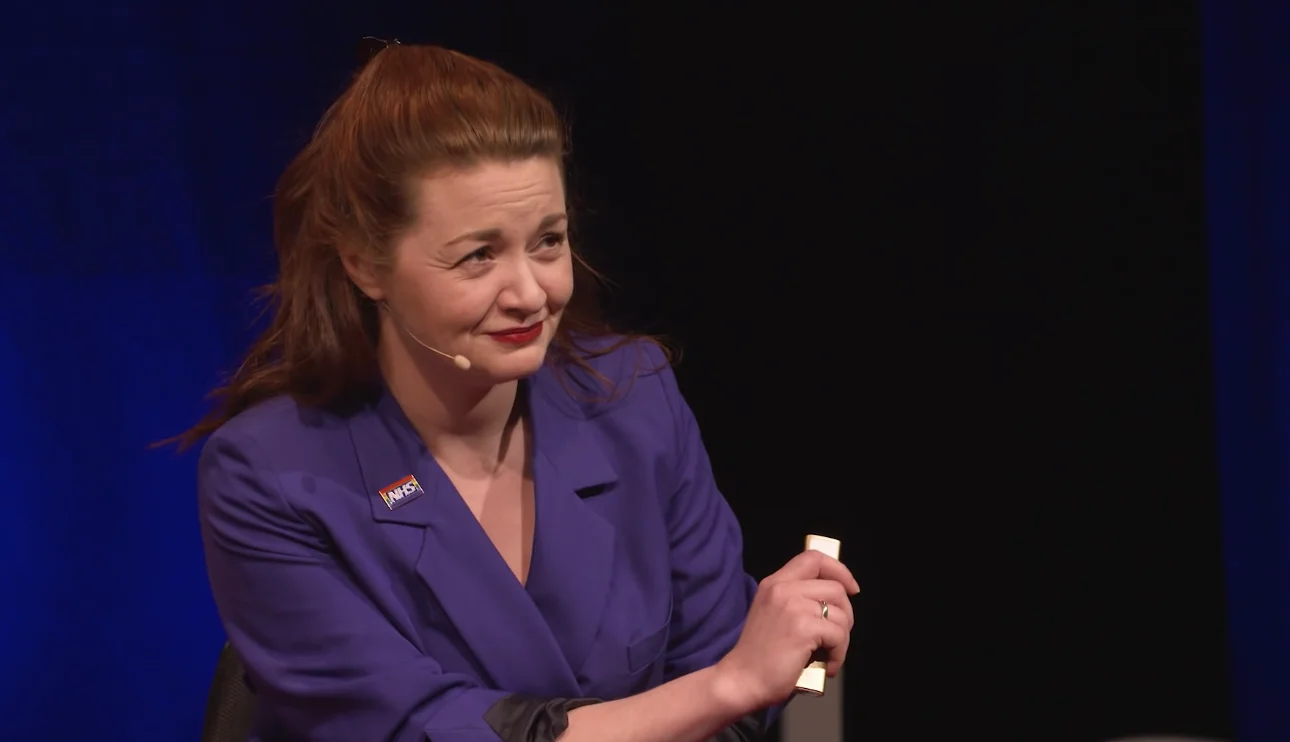
Hannah Barham-Brown is a doctor with Ehlers-Danlos syndromes. She uses a wheelchair to get around.
She went on to her ward one day and an elderly patient shouted: “What is wrong with my doctor?”
The whole ward fell silent.
“WHAT IS WRONG WITH MY DOCTOR?” she repeated while staring at Hannah.
Hannah rolled over to her, took her hands and said: “Well, I am quite disorganised, I am very loud and my legs don’t really work. Now, how are you feeling today?” she said.
Hannah wasn’t disabled for the first 27 years of her life as she began a medical course in London.
Ehlers-Danlos syndromes
She always thought she was just very flexible – but it ended up being the little-known diagnosis of Ehlers-Danlos syndromes.
“Life would never be the same again when I was diagnosed with EDS,” said Hannah.
“I had gone from running charity events for other people to crowdfunding my own wheelchair just so I could finish my medical course and qualify. Suddenly, I was the charity case.
“My diagnoses changed everything. I would catch my reflection in a shop window and not recognise the person with a stick looking back at me. It battered my self-confidence and I thought nobody would ever fancy me again.
“Worse, as a doctor, I know how EDS can progress. Every injury feels like a step towards the day when I have to call time on medicine.”
But in many ways, Hannah’s diagnoses was a relief to her. It proved that her body was different to other people’s and she could now access the support she needed.
Disabled
Hannah is in pain most days, but in many ways, she still feels quite lucky. She has grown up with a role model in her mother who has challenged stereotypes for ever.
“I never saw disabilities as a weakness because my mum is disabled. She spends every day using her skills to make a better place for people in our society,” she said.
“Because of my mum, I would never use my disability as an excuse.”
Eighteen months after her diagnosis, she qualified as a doctor and a trainee GP.
“There are not many GPs in a wheelchair and I have seen the eyes of kids in wheelchairs light up when their doctor rolls in in a wheelchair too,” she said. “They see they can be whatever they want to be even though the world has been telling them that they are different. That spark can be life-changing.
Patients
“My ‘brokenness’ also gives me a unique ability to relate to my patients. I have a knowledge of what they have to work with.
“I really feel like there has been a positive push towards greater inclusion over the last few years – and disabled voices should be heard because they are important.
“We should be included in the conversation because our skills and knowledge are invaluable. Job adverts say companies want problem-solvers. Well, we are problem solvers because the world goes on without putting us in their minds. We can make practical assessments. Companies should be begging for people like me to work with them. We do so much more than tick a diversity box.”
Read more: NEWS: The disabled community will be hardest hit by the energy crisis
Read more: BLOG: ‘The wheels of courage’