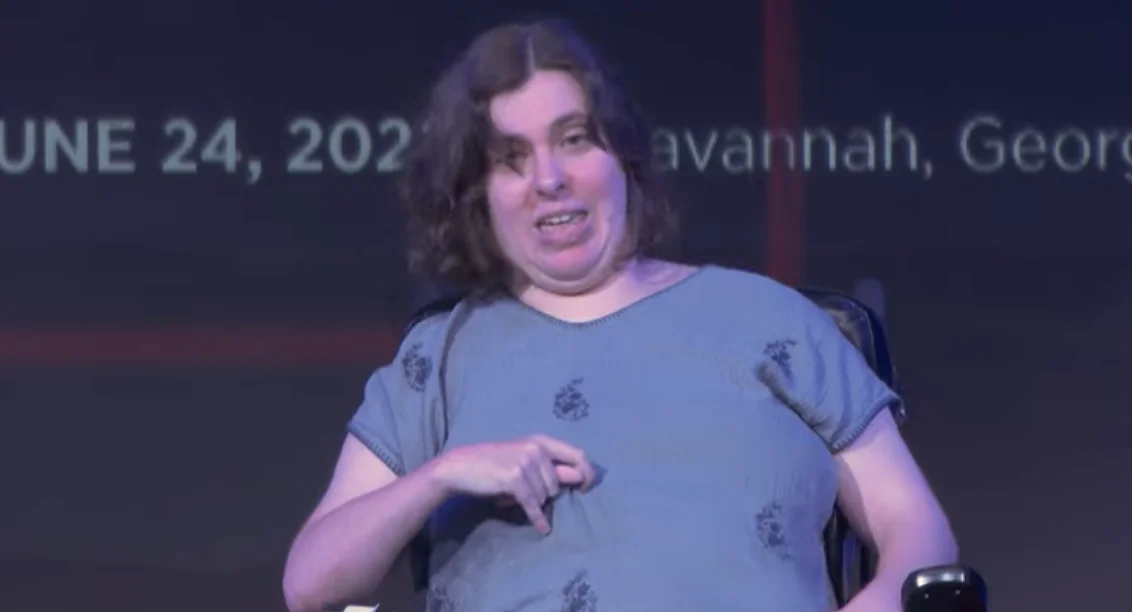
Mary Dillard wants to challenge stereotypes and calls on all of us to create a world that is accessible for everyone.
She was born with Cerebral Palsy and went on to graduate with a degree in technical writing. Mary is a passionate advocate for individuals with disabilities.
The most often type of question Mary gets asked by strangers are ones like: “What is wrong with you?”
“How did you get in an accident?”

She doesn’t get the idle chit-chat first or the passing comment. It’s always a version of ‘what’s wrong with you’?
“People may think that is rude but, for people with disabilities, that is all too familiar,” says Mary.
“I have just graduated and started my first job, but nobody would know that if they just asked what was wrong with me.”
Mary also feels overlooked as she goes about her day-to-day business.
Access
Laws have been passed to help disabled people access everyday things but, as the years go by, how well are we implementing those laws?
There are many times in Mary’s daily life when she can’t even use the accessible features that are meant to help her.
Buttons that open doors either don’t work or are unreachable, ramps are too steep to be used and those that are okay are sometimes blocked by cars!
“If I do find myself hampered by such inaccessibility, there is absolutely nothing I can do, there and then, to change things,” adds Mary.
“If the intentions are noble but the execution is flawed, are we really getting anywhere at all?
“So, how do we fix that?
Construction projects
“I think it’s important that we bring disabled perspectives in on the ground floor of construction projects. That way, we can ensure that guidelines translate into real world accessibility.
“Also, we have to do our best to stop allowing our pre-conceived notions to affect our conversations. We all have biases – but they can become negative when they stop valuable connections happening.
“For example, people assume things about my ability based on how I look. Meanwhile, I assume things about able-bodied people based on past interactions with them.
“When the only thing people want to know about me is ‘what is wrong with you?’, that apportions blame and fails to recognise that there may be a problem with the world that we all live in.
“See us, hear us…and together we can create a world that is accessible for all.”
READ MORE: BLOG: ‘Just what is wrong with my doctor?’
READ MORE: BLOG: ‘The wheels of courage’