

A walking frame with seat offers both mobility support and a place to rest, making it a popular choice for people who need help with balance but also benefit from regular breaks when walking. One of the most important safety features on these walking aids is the braking system.
Different brake types work in different ways, and understanding how they operate can help you choose a walking frame that feels safe, comfortable and easy to use. In this guide, we explain the most common brake types found on walking frames with seats, including loop brakes, push-down brakes and parking brakes, and what to consider when deciding which is right for you.
What is a walking frame with seat?
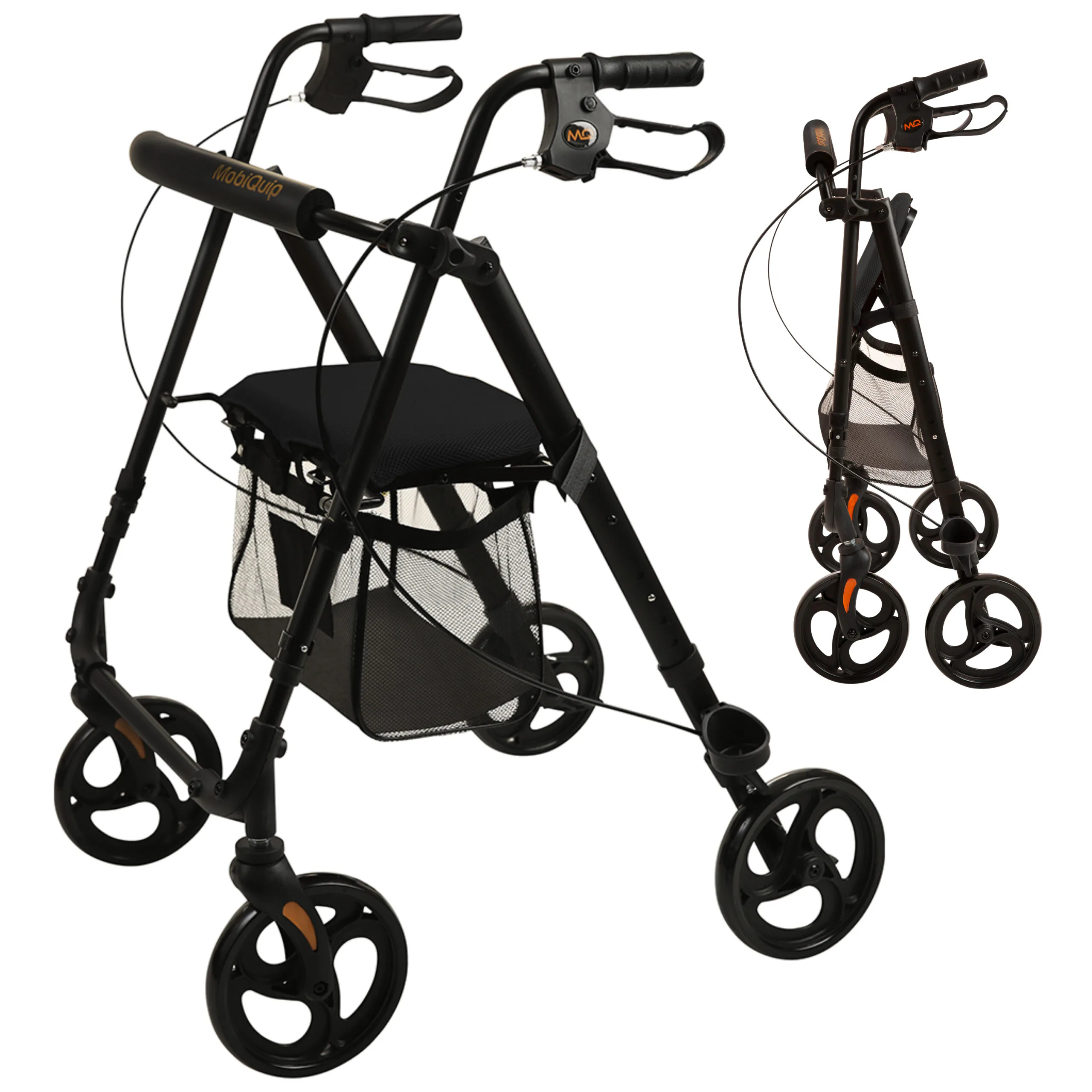
A walking frame with seat is a wheeled walking aid that provides support while walking and includes a built-in seat for resting. These are often referred to as rollators and are designed for people who can walk but may:
- Feel unsteady over longer distances
- Need regular rest breaks
- Want reassurance when out and about
Most walking frames with seats have four wheels, hand grips, brakes and a padded or firm seat positioned within the frame.
You can explore different designs within Mobiquip’s rollators and walking aids range.
Why brakes matter on a walking frame with seat
Brakes play a crucial role in keeping a walking frame with seat safe and predictable to use. They help control speed, maintain stability and ensure the frame stays still when sitting down or standing up.
Effective brakes are especially important when:
- Walking on slopes or slight inclines
- Turning corners
- Stopping to sit on the seat
- Standing still for short tasks
Understanding how each brake type works can help you feel more confident using your walking frame day to day.
Loop brakes explained
Loop brakes are one of the most common brake types found on walking frames with seats.
How loop brakes work
Loop brakes are operated using hand levers positioned below the handles. To slow down or stop the frame, you squeeze the levers upwards, similar to bicycle brakes.
They provide controlled braking while walking and are often paired with a parking brake function, which we’ll cover later.
Who loop brakes are suited to
Loop brakes may be suitable if you:
- Have good hand strength and control
- Want responsive braking while walking
- Are comfortable squeezing levers
They are commonly used on outdoor and everyday rollators because they offer good control, particularly on uneven ground or gentle slopes.
Things to consider
If you have reduced grip strength or arthritis, loop brakes may feel tiring to use over longer periods. In these cases, alternative brake styles may be easier to manage.
Push-down brakes explained
Push-down brakes are designed to activate when downward pressure is applied through the handles.
How push-down brakes work
To engage the brakes, you press down firmly on the handles of the walking frame. This downward force locks the wheels, preventing movement.
Unlike loop brakes, push-down brakes do not require squeezing hand levers, which some people find more comfortable.
Who push-down brakes are suited to
Push-down brakes may be a good option if you:
- Have limited grip strength
- Find hand levers uncomfortable
- Prefer a simpler braking action
They are often found on lighter indoor or everyday walking frames designed for smooth, flat surfaces.
Things to consider
Push-down brakes rely on body weight being applied through the frame. This means they may not offer the same level of speed control while walking as loop brakes, particularly outdoors.
Parking brakes explained
Parking brakes are designed to keep the walking frame completely still when you are stopped.
How parking brakes work
Parking brakes are usually engaged by pushing the loop brake levers downwards until they lock into place. Once engaged, the wheels remain locked until the brakes are released.
Some push-down brake systems also include a parking function that stays engaged without continuous pressure.
Why parking brakes are important with a seat
Parking brakes are especially important on a walking frame with seat. They help ensure the frame does not move when:
- Sitting down on the seat
- Standing up from the seat
- Pausing on a slope or uneven surface
Without a reliable parking brake, sitting on a walking frame can feel unstable or unsafe.
Comparing brake types at a glance
While each brake type serves a purpose, the right choice depends on how and where the walking frame will be used.
- Loop brakes offer active control while walking
- Push-down brakes focus on simplicity and ease of use
- Parking brakes provide stability when stationary or seated
Many walking frames with seats combine loop brakes with a parking brake function, offering flexibility for different situations.
Choosing the right brake type for your needs
When deciding which brake system suits you best, it helps to think about your daily routine and physical comfort.
Consider the following:
- How strong and comfortable your grip is
- Whether you mainly walk indoors or outdoors
- How often you plan to use the seat
- Whether slopes or uneven surfaces are part of your routes
If you walk longer distances outdoors, loop brakes with a parking brake may feel more reassuring. If indoor use is your main focus and grip strength is limited, push-down brakes may be easier to manage.
Brake adjustment and maintenance
Brakes on walking frames with seats are designed to be reliable, but they do require occasional checks.
It is a good idea to:
- Ensure brakes engage evenly on both sides
- Check that the frame does not roll when parking brakes are on
- Avoid using a frame if the brakes feel loose or unresponsive
If replacement parts or compatible accessories are needed, Mobiquip’s accessories section can be a helpful place to explore suitable options.
Walking frames with seats and everyday confidence
A walking frame with seat is not just about walking support. It is also about confidence, pacing and knowing you can stop and rest when needed.
Reliable brakes contribute to this by helping you:
- Walk at a comfortable speed
- Stop safely when needed
- Sit down and stand up with reassurance
For many people, this combination of movement and rest makes outings feel more manageable and less tiring.
When a walking frame with seat may not be suitable
While walking frames with seats suit many people, they are not the right solution for everyone.
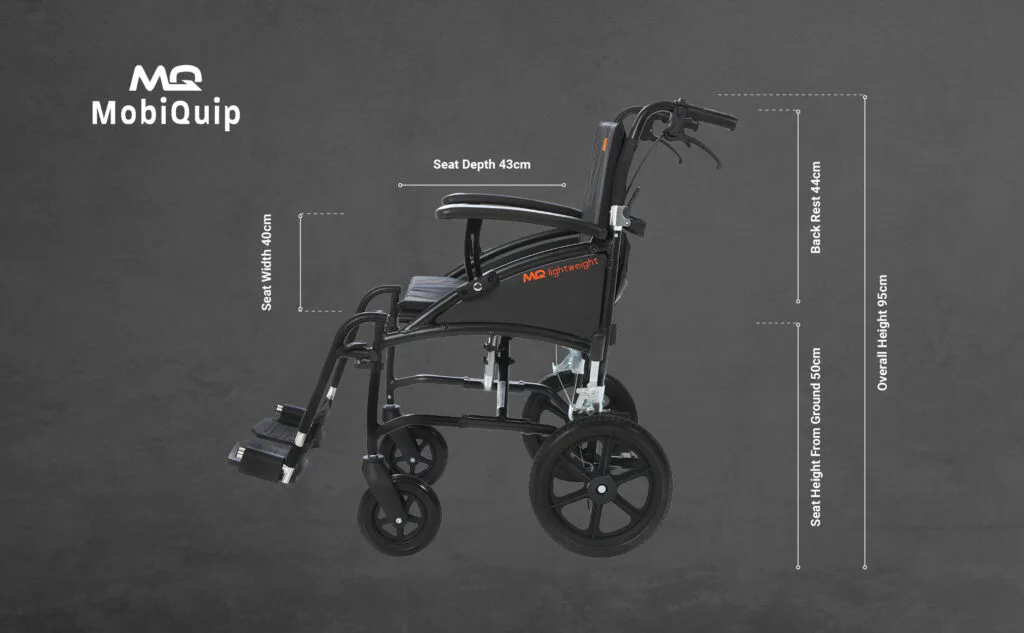
If walking short distances is still difficult or uncomfortable even with support, a wheelchair may provide more consistent assistance. You can view suitable options in Mobiquip’s wheelchairs range.
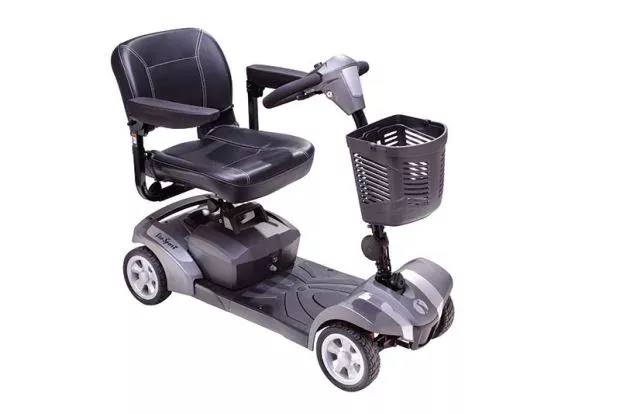
If most of your journeys involve longer outdoor distances rather than walking from place to place, a mobility scooter may be a more practical alternative. Mobiquip’s mobility scooters category outlines options designed for extended travel.
Frequently asked questions about brake types
Do all walking frames with seats have parking brakes?
Most models designed for seated use include a parking brake, but this can vary. It is always worth checking product details before buying.
Are loop brakes safer than push-down brakes?
Neither is inherently safer. Safety depends on correct use, suitability for the user and proper adjustment.
Can brakes be adjusted?
Many brakes can be adjusted to improve responsiveness. This should be done according to manufacturer guidance.
What if the brakes stop working properly?
If brakes feel unreliable, the walking frame should not be used until the issue is resolved.
Choosing a walking frame with seat that feels right
A walking frame with seat can support both movement and rest, helping you manage daily walking at your own pace. Understanding brake types, from loop brakes to push-down and parking brakes, allows you to choose a design that feels safe and comfortable to use.
When comparing options, focus on how the brakes feel in your hands, how stable the frame feels when seated, and how it fits into your usual walking environment.
You can explore suitable designs within Mobiquip’s rollators and walking aids range to compare features and understand which options align best with your needs.
The right walking frame is one that supports confidence, safety and steady movement in everyday life.