

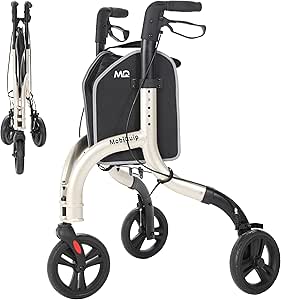
If you rely on a rollator and regularly travel by car, storage quickly becomes an important consideration. Many people discover that while a rollator works well day to day, fitting it into a small car boot can be awkward or unpredictable. This is especially common with compact cars, city cars and hatchbacks.
A folding rollator is designed to make transport easier, but not all folding designs are the same. Knowing which measurements to check before buying can help avoid frustration and ensure the rollator fits comfortably into your car without unnecessary lifting or dismantling.
This guide explains what to measure, why those measurements matter, and how to choose a folding rollator that suits both your mobility needs and your vehicle.
Why boot size matters when choosing a rollator
For many people, the ability to take a rollator out and about supports independence. Whether it is for shopping, visiting family or attending appointments, a rollator that fits easily into the car makes everyday travel simpler.
Small car boots can be challenging because:
- Opening space may be narrow
- Depth and height can be limited
- The boot floor may slope or have raised lips
A rollator that technically “fits” may still be difficult to load if it is bulky, heavy or awkwardly shaped when folded.
Choosing a folding rollator with transport in mind helps reduce strain and makes outings more manageable.
What makes a rollator “folding”?
A folding rollator is designed to collapse into a smaller shape for storage and transport. Most folding mechanisms reduce the rollator’s width, depth or both.
Common folding styles include:
- Side-folding, where the rollator folds inward from the sides
- Front-to-back folding, where the frame collapses lengthways
- Quick-fold frames, which fold with minimal effort
Each folding style affects how compact the rollator becomes and how easily it fits into a car boot.
You can explore different folding designs within Mobiquip’s rollators and walking aids range.
Key measurements to check before buying
Measurements are often listed on product pages, but it is important to understand what they actually mean in real-world use.
Folded width
Folded width is one of the most important measurements for small car boots.
This measurement tells you how narrow the rollator becomes once folded. A slimmer folded width makes it easier to:
- Fit the rollator through the boot opening
- Slide it alongside shopping or other items
- Store it upright if needed
If your boot opening is narrow, folded width often matters more than overall folded depth.
Folded depth (front to back)
Folded depth shows how long the rollator is when collapsed.
This is particularly relevant if:
- Your boot is shallow
- You want the rollator to lie flat
- You need space for additional items
Checking both width and depth together gives a clearer idea of how the rollator will sit in your boot.
Folded height
Folded height is sometimes overlooked, but it can be important in smaller cars.
A rollator with a tall folded height may:
- Catch on the boot lid when closing
- Be difficult to stand upright
- Limit how much else you can carry
This is especially relevant if the boot opening slopes inward.
Measuring your car boot correctly
Before choosing a folding rollator, it helps to measure your car boot accurately.
To do this:
- Measure the width of the boot opening, not just the internal width
- Measure the depth from the boot lip to the back seats
- Measure the height of the boot opening, especially if the lid slopes
These measurements give you a realistic idea of what will fit comfortably rather than just what might squeeze in.
It can also be helpful to consider how you prefer to load the rollator. Some people lift and place it flat, while others tip and slide it in upright.
Weight and lifting considerations
Measurements are not the only factor to think about. The weight of a folding rollator plays a role in how easy it is to load into a car.
A heavier rollator may still fit in the boot, but lifting it repeatedly can cause strain. This is worth considering if you:
- Have reduced upper body strength
- Experience joint pain or stiffness
- Load and unload the rollator frequently
Some folding rollators are designed to balance sturdiness with manageable weight. Comparing specifications within the rollators category can help you judge what feels realistic for your needs.
Wheel size and folded shape
Wheel size affects how compact a rollator becomes when folded.
Smaller wheels often allow for a tighter fold, which can be useful for small boots. Larger wheels may improve outdoor performance but can add bulk when folded.
This trade-off is worth considering if you regularly use both indoor and outdoor environments.
If outdoor walking is also a priority, you may want to compare folding rollators with other mobility options such as mobility scooters for longer distances.
Folding mechanisms and ease of use
A folding rollator should not only fit in your car, but also be easy to fold and unfold.
Look for features such as:
- Simple folding actions without complex steps
- Clear locking mechanisms when unfolded
- Frames that stay compact when folded
If a folding mechanism is stiff or awkward, it can become frustrating over time, even if the rollator technically fits your boot.
Storage position in the boot
How the rollator sits in the boot matters just as much as its folded dimensions.
Some rollators:
- Lie flat on the boot floor
- Stand upright against one side
- Fit diagonally to maximise space
Thinking about storage position can help you decide which folded shape works best for your car.
Accessories and removable parts
Some rollators include removable components that affect folded size.
For example:
- Bags or baskets that can be detached
- Backrests that fold down
- Handles that adjust lower for storage
While these features do not change the frame size, they can help make storage neater and more flexible.
Mobiquip’s accessories range includes practical add-ons that can complement a rollator without interfering with folding or transport.
Who benefits most from a folding rollator?
A folding rollator can be particularly useful if you:
- Drive a small or compact car
- Travel regularly and need portable support
- Store your rollator between trips
- Share car space with other passengers or items
They are also popular with carers who regularly load and unload equipment on someone else’s behalf.
When a folding rollator may not be the best fit
While folding rollators suit many people, they are not always the right solution.
If walking longer distances is difficult even with support, a wheelchair may offer more comfort and predictability. You can explore suitable options in Mobiquip’s wheelchairs range.
If most of your travel involves outdoor distances rather than walking from the car, a mobility scooter may be a more practical alternative.
Choosing the right aid depends on how and where it will be used most often.
Practical tips for everyday use
Once you have chosen a folding rollator, a few habits can make transport easier.
- Practise folding and unfolding at home
- Keep the boot clear to avoid awkward lifting
- Position the rollator the same way each time
- Secure it if needed to prevent movement while driving
These small steps can make car journeys feel more straightforward and less tiring.
Frequently asked questions about folding rollators
Do all folding rollators fit in small car boots?
No. Folding rollators vary widely in folded size. Checking measurements against your boot dimensions is essential.
Are folding rollators less stable?
Not necessarily. When unfolded and locked correctly, folding rollators are designed to be stable for everyday use.
Can a folding rollator be lifted with one hand?
Some lighter models can be lifted one-handed, but this depends on weight and individual strength.
Do folding rollators wear out faster?
Folding mechanisms are designed for regular use. Normal wear is similar to non-folding models when used as intended.
Choosing the right folding rollator for your car
A folding rollator can make travelling with mobility support far more manageable, especially if you drive a smaller car. By focusing on folded measurements, weight and ease of handling, you can choose a rollator that fits both your mobility needs and your vehicle.
Taking the time to measure your boot and compare specifications helps avoid compromise later. The right rollator should feel practical, not restrictive, whether you are heading out for a short errand or a longer journey.
You can explore suitable options within Mobiquip’s rollators and walking aids range to compare folding designs intended for easier transport.
The goal is simple: mobility support that fits smoothly into your daily life, including the car you use every day.