

If you’re searching for disability pushchairs, there’s a good chance you’ve already outgrown the neat categories that most baby and mobility products live in.
Your child isn’t a baby anymore. They’re bigger, heavier, more aware of the world. They may be able to walk short distances, but not far. They might fatigue quickly, struggle with balance, or need postural support that a standard buggy just doesn’t offer. And yet, a full-time wheelchair can feel like a big step, practically and emotionally.
That’s where the pushchair vs lightweight wheelchair question usually starts.
There isn’t a universal right answer. There are, however, some clear differences that matter in day-to-day life.
Why this decision is harder than it looks
For younger children, specialist pushchairs are an obvious choice. For teenagers with permanent mobility needs, wheelchairs make sense. Older children who sit somewhere in the middle are the tricky bit.
They may:
- Walk at home but not manage long outings
- Need support on bad days, but not every day
- Be growing quickly, making long-term equipment choices stressful
- Resist anything that makes them feel “different”
Parents are often balancing comfort, independence, school routines, transport, and public perception all at once. It’s not just a mobility decision. It’s a lifestyle one.
What disability pushchairs are actually designed for
A disability pushchair is not just a bigger buggy. Good ones are built with a very specific purpose.
They’re designed for children who:
- Need postural support
- Cannot safely self-propel
- Tire easily when walking
- Require harnessing or specialist seating
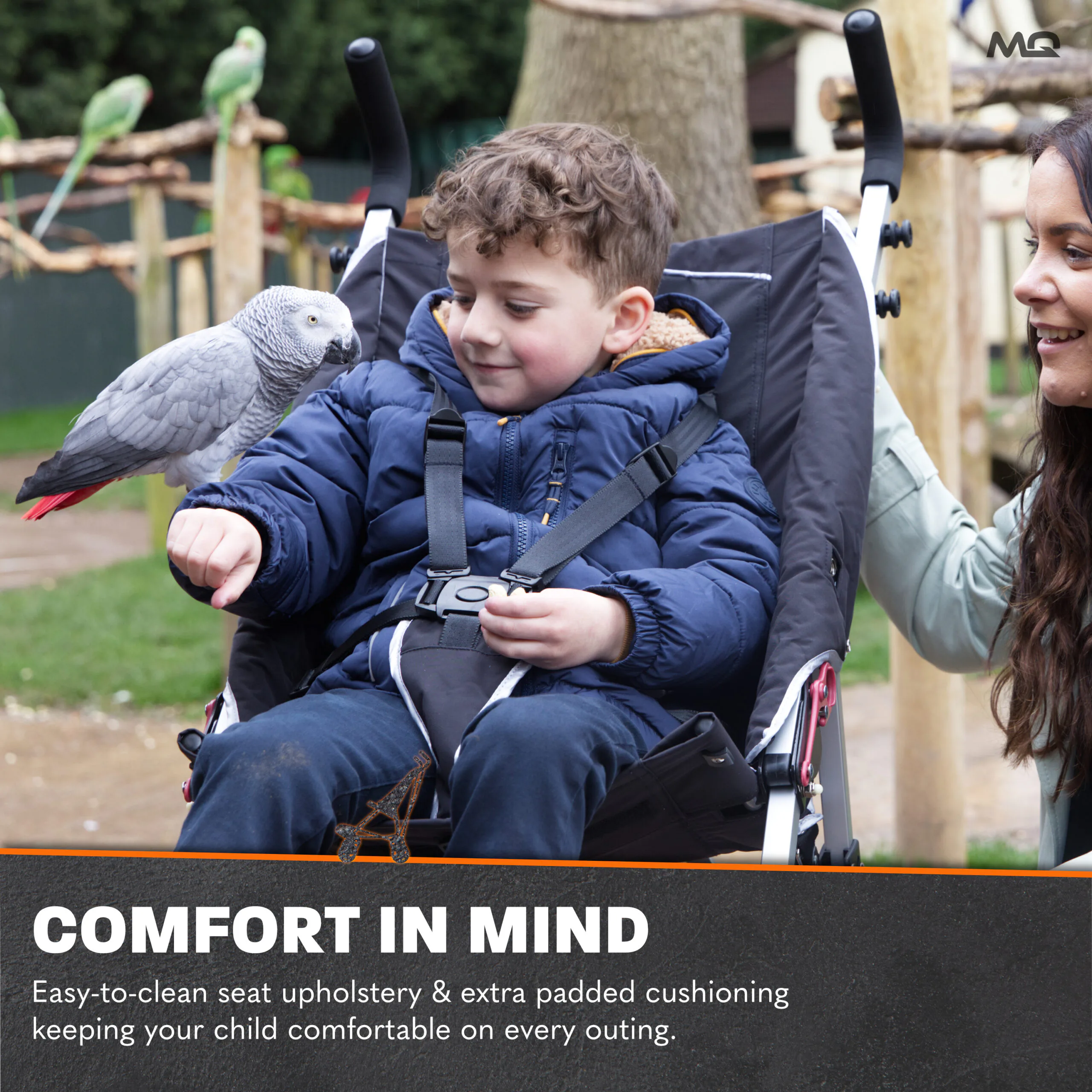
Many families start with disability pushchairs that offer higher weight limits, stronger frames, and better postural support than standard buggies.
Most specialist pushchairs include features you simply won’t find on everyday models:
- Tilt-in-space seating
- Adjustable headrests and lateral supports
- Five-point harness systems
- Compatibility with specialist seating inserts
They’re often used for children with cerebral palsy, muscular dystrophy, genetic conditions, or complex developmental needs. They’re also common for children with fluctuating conditions where mobility varies day to day.
Where pushchairs shine
For many families, pushchairs work best when:
- The child does not have the strength or coordination to self-propel
- Carers do most of the pushing
- The child needs frequent postural adjustments
- Outings are short to medium length
They tend to feel more familiar. Less clinical. Less like a “mobility aid” and more like a piece of everyday equipment.
That familiarity matters, especially in early school years.
Where disability pushchairs start to struggle
There’s a point where even the best pushchair starts to feel limiting.
As children grow:
- They get heavier, making pushing harder
- Frames become bulkier
- Folding and lifting becomes a real issue
- Social awareness increases
A 9 or 10-year-old in a pushchair can feel awkward, particularly in public spaces. Some children actively dislike the feeling of being pushed everywhere, even if they can’t physically manage a wheelchair yet.
This is usually when families begin looking at alternative options.
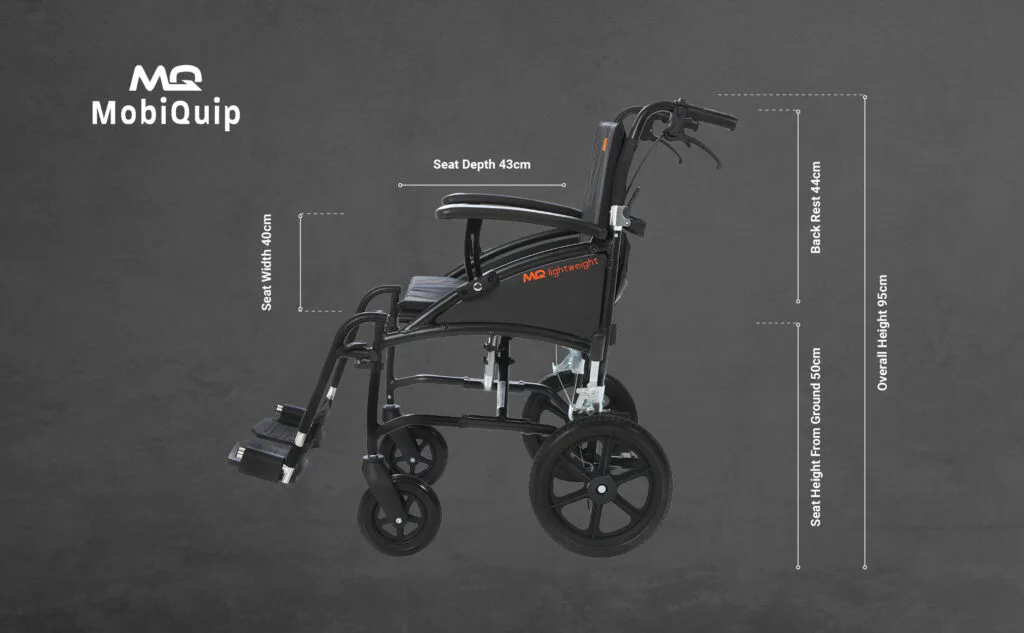
Understanding lightweight wheelchairs for children
A lightweight wheelchair doesn’t automatically mean full independence. That’s a common misconception.
These chairs are designed to:
- Be easier to push and manoeuvre
- Allow occasional self-propulsion
- Grow with the child
- Look less bulky and more age-appropriate
As children get older, some families start exploring lightweight wheelchairs that offer more flexibility, particularly for school and short trips.
Many children use wheelchairs part-time. They may self-propel indoors or on smooth surfaces, and be pushed outdoors or on longer journeys.
Why some children prefer wheelchairs earlier than expected
There’s a psychological side that often gets overlooked.
Some older children prefer wheelchairs because:
- They sit at eye level with peers
- They feel more “grown up”
- They have some control over movement
- They aren’t strapped in as tightly
For children who value independence, even partial control can be empowering.
Pushchair vs wheelchair: practical day-to-day differences
This is where the decision becomes very real.
Transport and storage
Pushchairs:
- Often fold in one piece
- Can be bulky even when folded
- May require large car boots
Lightweight wheelchairs:
- Usually break down into smaller parts
- Easier to lift in stages
- Often fit better in standard cars
If you’re lifting equipment daily, this matters more than you think.
School environments
In schools, wheelchairs often integrate better:
- Easier to manoeuvre through corridors
- More compatible with desks and tables
- Less reliance on constant adult pushing
That said, some schools are better equipped than others. A pushchair may be simpler in settings with limited accessibility.
Fatigue management
Pushchairs:
- Fully passive for the child
- Well suited to children with very low stamina
Wheelchairs:
- Can increase fatigue if self-propelling
- Offer flexibility to rest or move
Some families alternate between the two depending on the day.
Postural support and comfort
This is one area where disability pushchairs often have the edge.
Pushchairs usually offer:
- Better tilt options
- More comprehensive trunk support
- Easier positioning adjustments
Wheelchairs can match this level of support, but often require:
- Custom seating systems
- Additional accessories
- Professional setup and review
If posture is a primary concern, a pushchair may remain the better option for longer.
Social and emotional considerations
This part rarely appears in product descriptions, but it often influences the final decision.
Some children:
- Feel babied in a pushchair
- Feel empowered in a wheelchair
Others feel the opposite.
Age alone doesn’t determine readiness. Personality plays a big role.
It’s also worth acknowledging parental emotions. Moving to a wheelchair can feel like crossing a line you weren’t ready for. That reaction is common and understandable.
Funding, assessments and professional advice
Whether you’re choosing a pushchair or a wheelchair, assessments matter.
Occupational therapists and physiotherapists can:
- Assess posture and long-term needs
- Recommend suitable seating systems
- Support funding or grant applications
Funding routes vary across the UK depending on diagnosis, location, and setting. Some equipment is provided through local services, while other items are purchased privately.
Where possible, trying equipment before committing can prevent expensive mistakes.
When families choose both
This can sound excessive at first, but it’s more common than you might expect.
A pushchair for:
- Long family days out
- Holidays
- Periods of higher fatigue
A wheelchair for:
- School
- Short journeys
- Social independence
Children’s needs change quickly. Flexibility often matters more than finding a single perfect solution.
Making the decision without overthinking it
If you’re stuck between a pushchair and a wheelchair, it’s usually because both options could work.
A few grounding questions help:
- Who will be doing most of the pushing
- How often will it be used
- Where will it be used most
- How does your child feel about it
If the answer to the last question isn’t clear, involve them as much as possible. Even younger children often have strong preferences.
Choosing between disability pushchairs and lightweight wheelchairs isn’t about labels or milestones. It’s about reducing daily effort, improving comfort, and supporting your child’s independence in a way that fits their life.
Some families transition gradually. Others make the switch earlier and never look back. Both approaches are valid.
The right choice is the one that makes everyday life feel a little easier.